
Keweenaw Lockup Release Endpoints
The Keweenaw County Sheriff’s Office operates a fully accredited 72-hour lockup in Eagle River. It is not a conventional long-stay county jail. The official county description says jail service for people held longer is obtained through contracts with neighboring counties. That structure creates several possible endpoints after a booking.
A person may leave for the community after bond, personal recognizance, a court order, dismissal, or completion of an authorized local detention. The Sheriff may instead transfer the person to a contract county jail, court, MDOC intake, or another lawful custodian. A transfer ends physical custody at the Keweenaw lockup but does not end custody overall. Another hold may also prevent a planned community release.
| Movement | Meaning | Where to verify next |
|---|---|---|
| Community release | The person leaves physical custody, subject to court terms or other duties | Sheriff release record and court case |
| Bond or recognizance | The detention episode ends while the case continues | 97th District Court and Sheriff record |
| Contract-jail transfer | A neighboring county takes physical custody | The named receiving jail and MI-VINE |
| MDOC transfer | State corrections becomes the custodian | OTIS and MDOC records |
| Federal or ICE transfer | A federal agency takes or directs custody | BOP, ICE, federal court, or the named agency |
Do not infer release: the passage of 72 hours does not prove that a person returned to the community.
Confirm Keweenaw Lockup Release
Begin with the office that controlled the first movement. Call the Keweenaw County Sheriff’s Office at 906-337-0528. Give the full name and approximate booking date, then ask whether the person was released to the community or transferred. Request the movement date and time, disposition or release code, and receiving agency. Staff may limit what can be given by telephone, so a written record request is the stronger path when proof is needed.
- Identify the person with a full name, approximate booking date, and any known court or booking number.
- Ask the Sheriff whether the event was community release or transfer.
- Obtain the date, time, movement code, receiving agency, and reference number.
- If transferred, contact the named agency instead of assuming which neighboring county received the person.
- Check MI-VINE for a reported release or transfer event and read the event label carefully.
- Use the court register to identify the bond, order, dismissal, or sentence behind the movement.
If the movement reached MDOC, search the Offender Tracking Information System. A prisoner, parolee, probationer, or qualifying recently discharged person may appear there. A short local booking usually will not. If the movement reached federal or immigration custody, OTIS is the wrong source. Use the relevant federal locator and the court or agency record instead.
The complete county search paths and field distinctions are covered in the Keweenaw County released inmate search. A no-result screen never substitutes for the Sheriff’s release-versus-transfer answer.
Keweenaw Lockup Release Records
The Sheriff maintains the local booking and movement record. Ask for specific existing documents rather than a broad inmate inquiry. The Sheriff public-record request form can be used for the booking or custody sheet, release form, transfer document, and a booking image if one exists and is publicly disclosable.
Keweenaw County Sheriff’s Office 72-Hour Lockup5105 Fourth Street
Eagle River, MI 49950
Non-emergency: 906-337-0528
Fax: 906-337-4278
No public lobby or records hours were documented in the research, so call before travel. The official page listed Sheriff Curt Pennala and Undersheriff/Jail Administrator Tonya Mattila at the research date. Personnel can change. Use the office and record type, not a person’s name, to route a formal request.
A focused request should seek the booking number, admission time, release or transfer time, disposition or code, and receiving agency. Add a date range and court number when known. Michigan FOIA generally requires the public body to grant, deny, grant in part, issue a permitted extension, or provide an authorized fee notice within five business days. That is a response deadline, not a guarantee of immediate production.
Keweenaw Lockup Facility Function
The Sheriff’s official description documents both the facility type and its contract model.
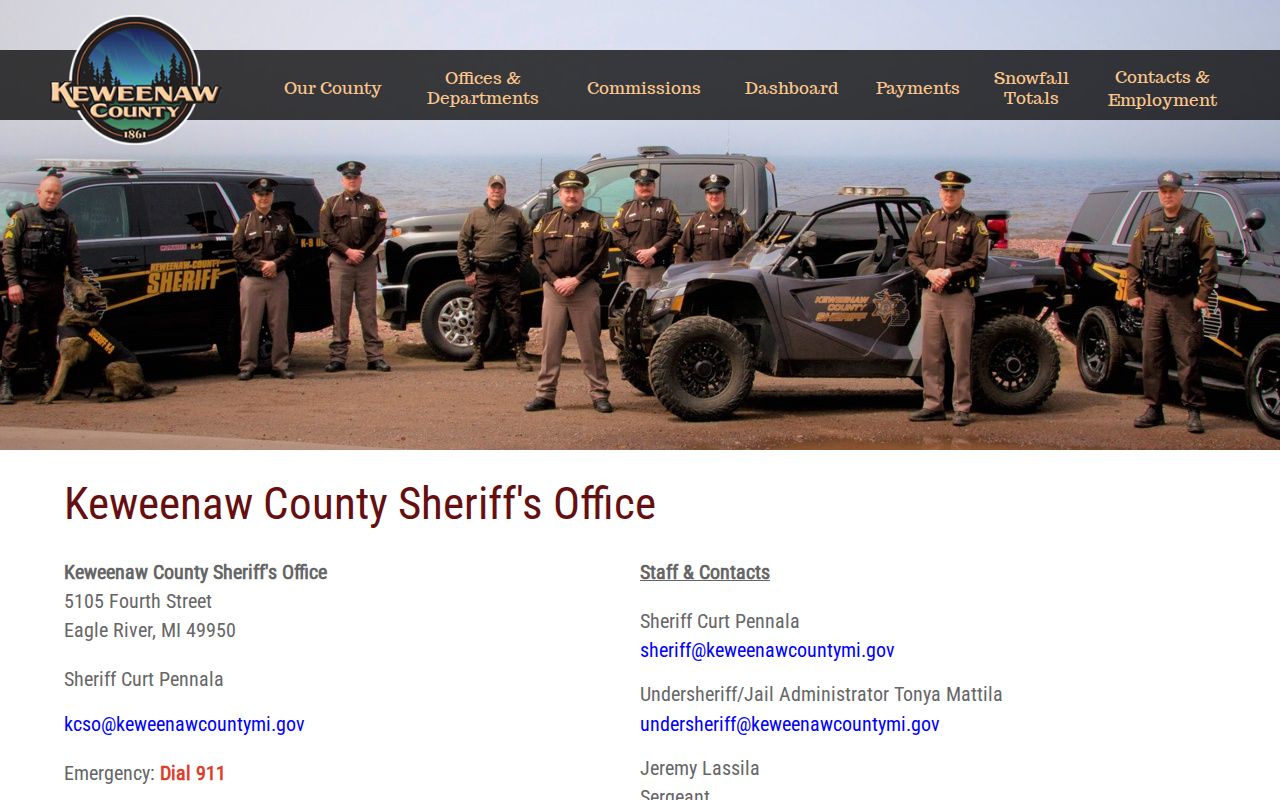
The screenshot supports the local distinction between short-term holding and longer custody elsewhere. It does not display a 72-hour release list. No official Keweenaw page was found with a current roster, recent-release feed, public archive, or booking-photo gallery.
Keweenaw County has one Sheriff’s Office, and the county page describes it as the only law-enforcement agency located in the county. That makes the Sheriff the first switchboard for reconstructing a local arrest-to-movement chain. It does not make the Sheriff the continuing custodian after a transfer. The receiving agency creates and controls the next custody record.
The county’s geography adds practical weight to destination verification. “Neighboring Counties” is plural. Placement can depend on available space, medical needs, court scheduling, or other holds. County board minutes may document dated operational history, but meeting minutes are not a live custody source. Use the Sheriff, receiving facility, VINE, court, or MDOC for a person’s current or past status.
Which Agency Has the Person?
The key Keweenaw question is often not simply whether someone left the lockup. It is which agency had the person next. The Sheriff’s movement record should name that recipient. Houghton County Corrections is a documented possible contract jail, but its own official page says it houses Keweenaw Sheriff inmates when a bed is available. It is not the automatic destination.
The official Houghton corrections page documents that conditional relationship.
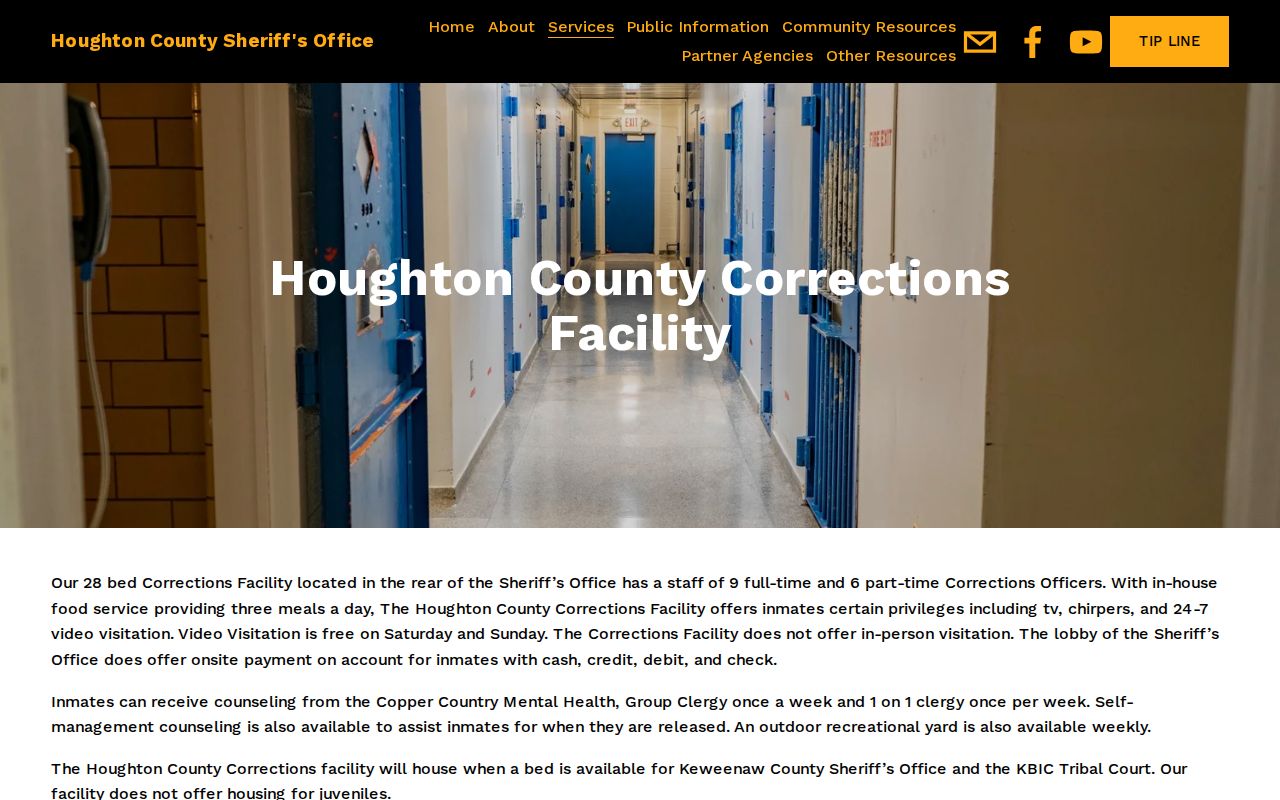
The screenshot supports Houghton as one possible receiver. It cannot prove that a named person went there. First obtain Keweenaw’s transfer detail. If Houghton is named, ask Houghton whether the person remains held, was released, or was moved again. The Houghton County Corrections Facility record path then becomes relevant.
If another county is named, use that county’s records office and VINE event instead. A movement can pass through more than one facility. Follow each confirmed transfer until an agency records community release, parole, discharge, or another final event.
Keweenaw Lockup Court Release Proof
The court record and Sheriff record should be read together. A 97th District Court entry can show arraignment, bail, personal recognizance, a misdemeanor event, or the first stage of a felony. The 12th Circuit Court becomes the durable felony source after bindover. A court order supplies legal authority, but the Sheriff’s timestamp records the physical movement.
MI-VINE adds an event and alert layer. Michigan offers phone, text, and email registration for reported custody changes. A “released” event means the person left the reporting agency’s custody. A “transferred” event signals that another agency may still hold the person. VINE is not the certified record, and updates can lag. Confirm with the agency that created the event.
- Release
- Departure from the reporting agency’s physical custody, which may still carry court or supervision duties.
- Transfer
- Movement into another agency’s custody rather than return to the community.
- Detainer
- A hold or request that can allow another authority to take custody.
- Parole
- Release from prison into MDOC supervision before maximum discharge.
Note: A bond entry authorizes release in one case, but another warrant, detainer, or case can still delay or prevent departure.
Keweenaw Lockup Release List Limits
No verified official Keweenaw County 24-hour or 72-hour recent-release feed was found. The facility’s “72-hour” label must not be turned into a list of people released during the last three days. The county publishes no feed URL, update schedule, field inventory, retention window, or photo flag for such a list.
A recent-person check therefore uses substantive fallback channels. Call the Sheriff for current release or transfer confirmation. Search MI-VINE for an event. Read MiCOURT for bond or disposition. Submit a narrow record request for the movement document. If the Sheriff names a receiver, use that agency’s system. Each channel answers a different piece of the same custody chain.
There is also no documented Keweenaw Sheriff mobile app or automated booking-photo social feed. The VINELink app belongs to the statewide notification system, not the county. It can help track an event but does not act as a county roster or a certified release record.
Keweenaw Lockup Record Limits
Michigan General Schedule 11 lists jail inmate jackets that can include intake cards, mug shots, sentencing documents, release forms, transfer records, bonds, and warrants. Item 11.210 gives a general minimum of release plus ten years, followed by destruction. An approved agency-specific schedule may control instead. Property-release records and some receipts can have shorter periods.
Retention does not guarantee public disclosure of every field. Medical details, protected personal information, active-investigation material under the statutory test, security information, juvenile records, and records affected by a court order may be withheld or redacted. A partial record can still establish the movement time and receiving agency.
Set-aside and sealing rules can also change public visibility. Do not treat an old screenshot as a way around a later nonpublic status. For an accurate Keweenaw lockup result, keep the record tied to the named person, booking episode, access date, and originating office.
Public Record Search
Sponsored Results